How to check dry fruit quality: what to look, smell and feel for
How to tell good dry fruit from bad, in a bazaar or at home: the signs of mould, insects and stale nuts, the white powder on figs, a quick check for each dry fruit, what to read on the label, and what home checks can't tell you.
6 min read
On this page
Whether you buy dry fruit loose in a bazaar, in a pack from a shop or online, a few simple checks tell you a lot about it. Here is what to look, smell and feel for, a quick check for each dry fruit, what to read on the label, and what no check at home can tell you.
Use your eyes, nose, fingers and tongue
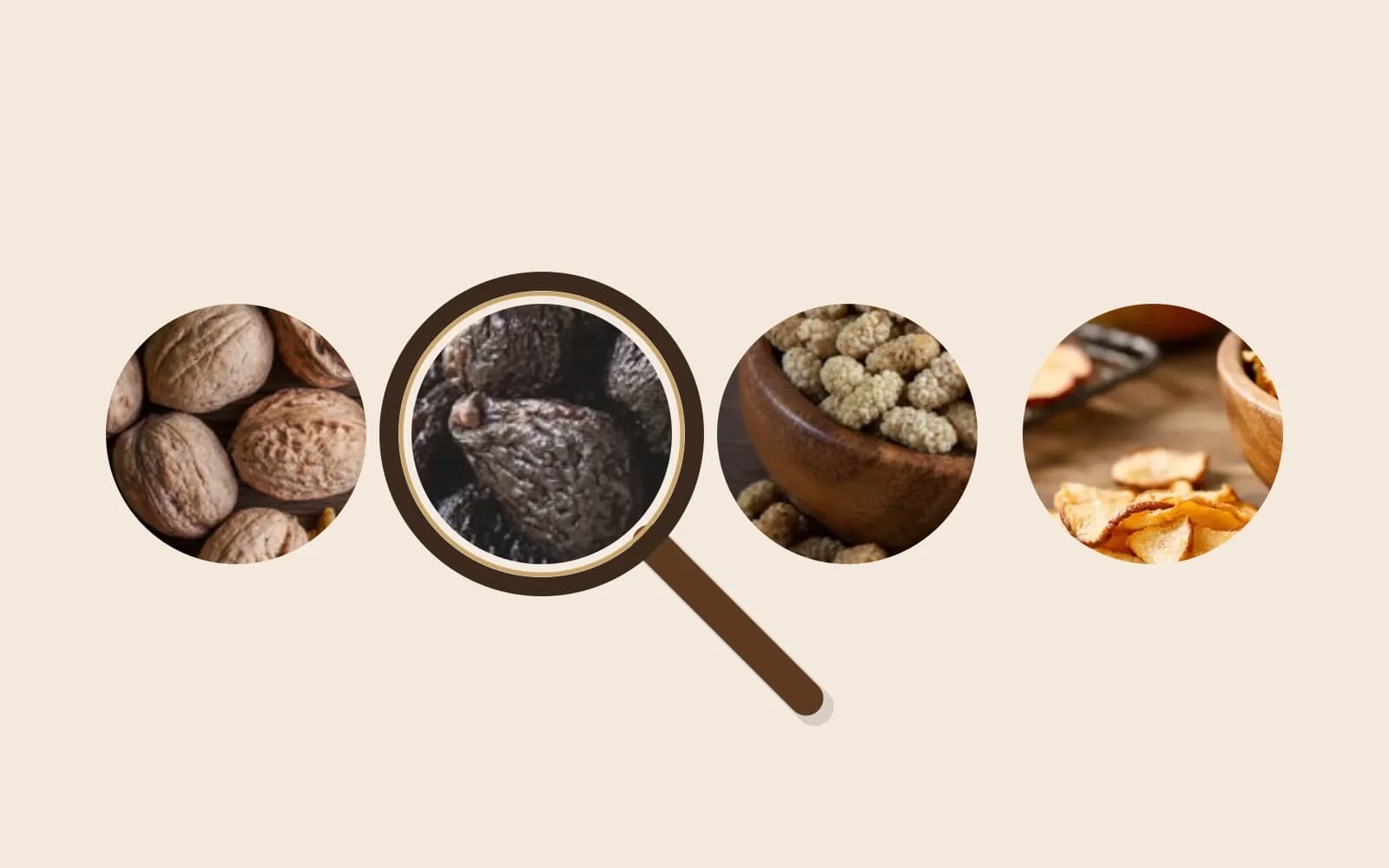
- Look. Good dry fruit is clean, with no dust, grit, holes or fine threads of webbing, and no fuzzy patches. Colour depends on how the fruit was dried, so darker is not always worse: apricots dried without sulphur, for example, are brown rather than orange.
- Smell. It should smell of the fruit or the nut: sweet, mild or nutty. A musty, damp or sour smell is a warning. So is a sharp, paint-like smell from nuts, which means they have gone stale.
- Feel. Dried fruit should feel dry and leathery, or soft and chewy, but never wet or slimy. The pieces should move freely in the bag rather than stick together in a damp clump. Nuts should be crisp and snap cleanly.
- Taste, if the seller lets you. A fresh walnut is sweet, with a slight bitterness from the skin. A bitterness that lingers, or a sour taste, means it is old.
Signs to walk away from
Mould. Moulds grow on dried fruit and nuts, "often under warm and humid conditions", says the World Health Organization, and some make toxins. Its advice is to inspect "dried figs and nuts such as peanuts, pistachio, almond, walnut" for mould, "and discard any that look mouldy, discoloured, or shrivelled". Don't just pick off the bad pieces: the WHO notes that mould can "penetrate deep into food and do not just grow on the surface".
Insects and webbing. Small moths and their larvae feed on dried fruit and nuts. University of Maryland Extension says that finding "webbing or a large number of caterpillars or worm-like larva" is "often the first indication of an infestation". Look in the corners of the bag, and in the folds of the fruit. Its advice is simple: "Discard infested products", and check the other jars nearby.
Damp clumps and a musty smell. Even without visible mould, these are signs that the fruit has been kept damp, which is what mould likes.
Stale nuts. Walnuts that look very dark and greasy, smell sharp or sour, or taste bitter have gone rancid. Our guide to walnuts of the north explains how to check them.
The white powder on dried figs
A fine white coating on dried figs worries many people, but it is usually sugar, not mould. Valley Fig Growers, in California, explain that "you might think it's mold, but more likely, it's actually naturally occurring fruit sugar crystals". They add that "these natural fruit sugars are edible", and that a light wash in warm water will dissolve them.
Mould looks different. According to the same company, mould on figs is "almost always black in color (not white) and on the inside of the figs". So if you are unsure, cut one open. If you see fuzz or dark patches inside, or the figs smell musty, throw them away.
A quick check for each dry fruit
- Dried apricots (chambor, khubani). Bright orange apricots have usually been treated with sulphur; sun-dried apricots without it are brown, from light tan to deep amber. Both should feel leathery and smell fruity. If you avoid sulphites, check the label. Read more in from blossom to chambor.
- Walnut kernels (birmogh, akhrot giri). Pale to light brown, crisp, with a mild nutty smell. Avoid dark, greasy or soft kernels. See walnuts of the north.
- Dried figs (anjeer). Soft and chewy, with no fuzz. White sugar crystals are fine; check the inside of one fig if you are unsure. See how to eat anjeer.
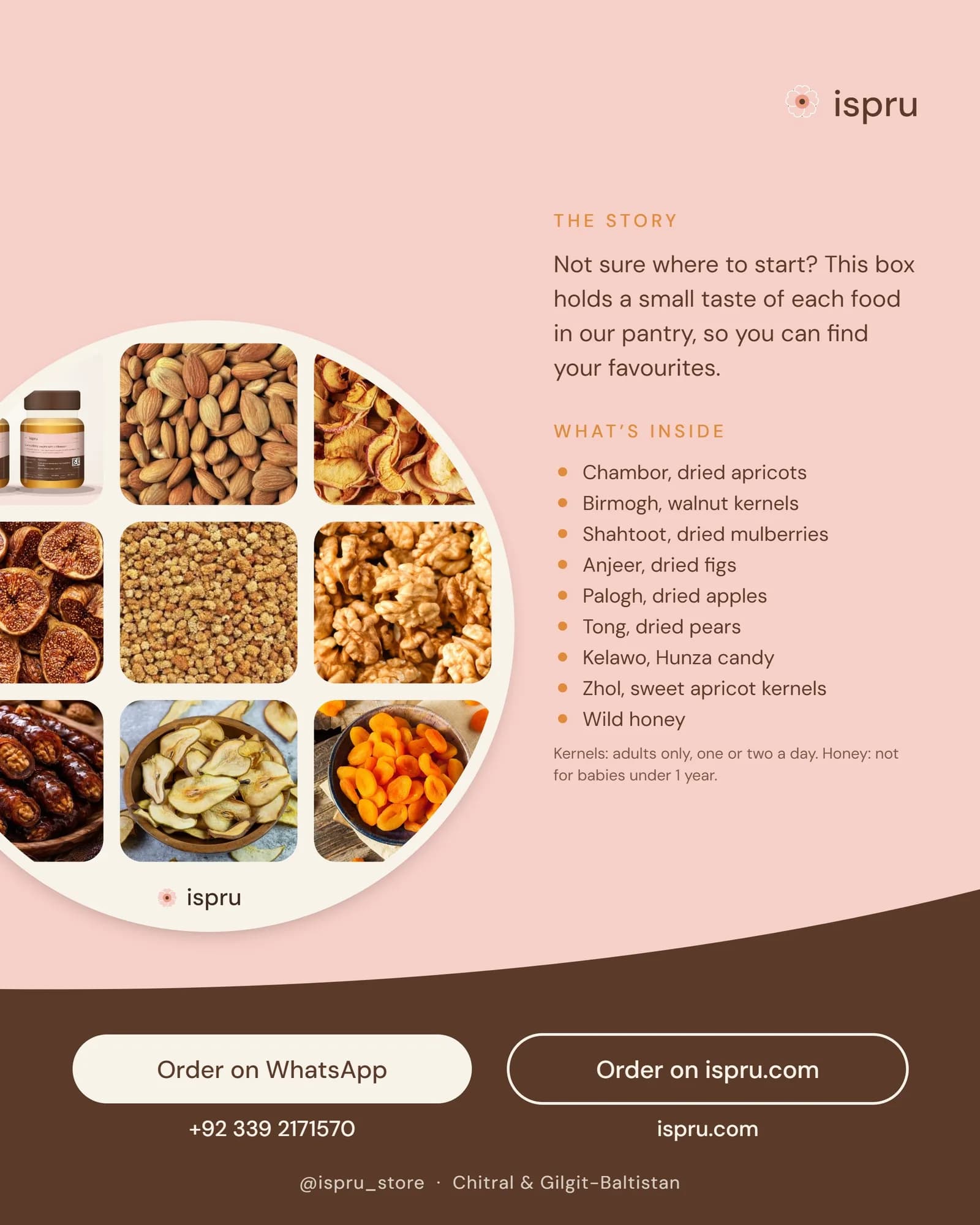
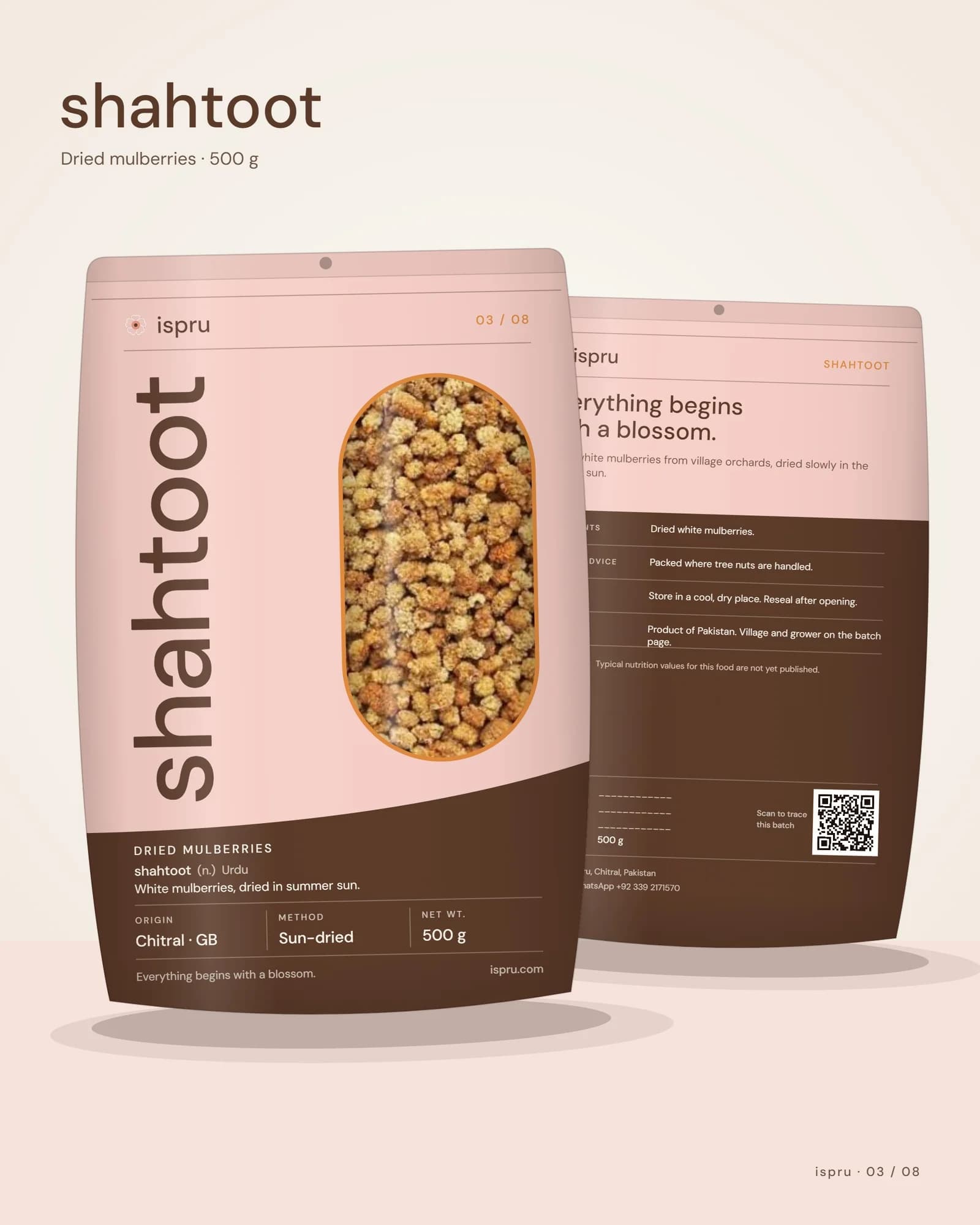
- Dried mulberries (shahtoot). Clean, dry and loose in the bag, mostly whole, with a sweet, mild smell. Soft, sugary mulberries spoil easily if they are kept damp, so look closely. Our guide to shahtoot explains what to look for.
- Dried apples and pears (palogh, tong). Dry and leathery or crisp, with no dark, fuzzy spots, and smelling of fruit. See dried apples and pears.
- Kelawo (Hunza candy). A firm, chewy coat of mulberry syrup around the walnuts, not wet or sticky, and no fuzz. Check the packing date: it keeps for less time than other dry fruit. See kelawo.
- Zhol (sweet apricot kernels). Sweet and bitter kernels look almost the same. Taste one first: if it tastes bitter, spit it out. Adults should eat no more than one or two small kernels a day, and they are not for children. Please read our guide to zhol.
Read the label
When you buy packed dry fruit, look for:
- When it was packed, and how long it keeps, or a best-before date. The WHO's advice is to "buy grains and nuts as fresh as possible".
- Where it comes from, and who packed it, with a way to contact them.
- What's in it. Many dry fruits need nothing but the fruit. If sulphites or other additives have been used, look for them in the ingredients: in many countries they have to be declared.
- Allergy information, such as "contains walnuts" or "packed where tree nuts are handled".
When you buy loose, take a closer look instead. University of Maryland Extension advises that when buying "bulk grains, dried fruit, flour, etc., inspect it carefully when loading it into bags for weighing".
Once you get it home
Check it again as you unpack it, then move it into glass jars or containers with tight lids. Maryland Extension notes that "many of the pantry pests are very small and can crawl under loose-fitting lids", and that "nuts, flours, meals, and dried chili peppers can all be frozen". The WHO's advice is to keep food "free of insects, dry, and not too warm". Our guide to storing dry fruits covers each one.
What home checks can't tell you
Looking, smelling and tasting will help you avoid dry fruit that is clearly old or spoiled. But they cannot tell you everything. Some moulds make toxins, such as aflatoxins, which the WHO says regularly contaminate dried figs and nuts, and those toxins cannot be seen. "Most mycotoxins are chemically stable and survive food processing," it adds. Only a laboratory can measure them.
The WHO also points out that "mould usually does not grow in properly dried and stored foods". So the best you can do is buy from a seller who tells you where their fruit comes from and when it was packed, store it well, and throw away anything that looks or smells wrong.
Try before you buy a lot
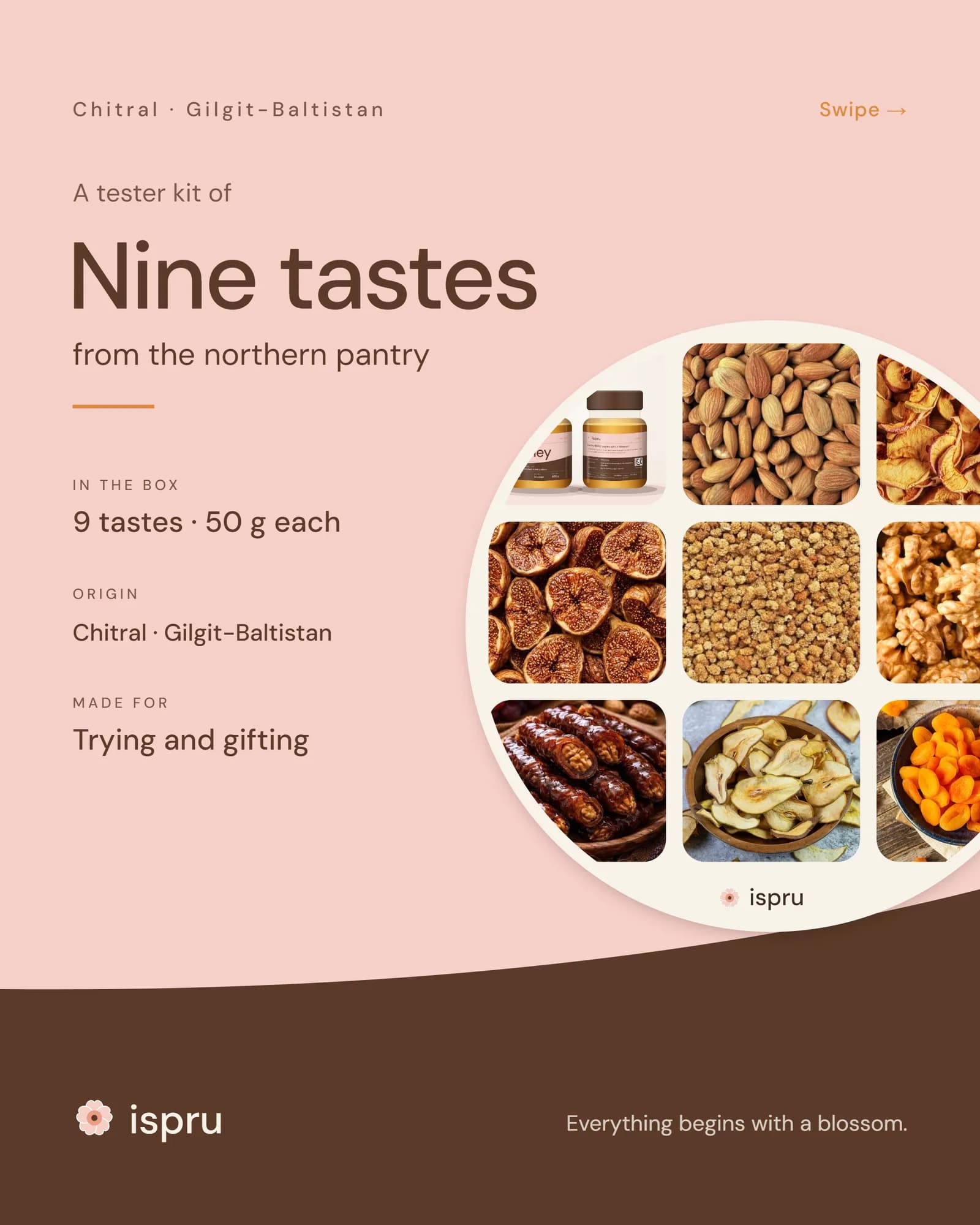
If you are buying for a wedding, Eid or a winter's supply, try a little first. Our tester kit holds a 50 g taste of every dry fruit and nut we sell, with our wild honey. Our pack labels show the date each pack was packed and its best-before date, with a code you can scan to see where that batch came from.
Sources
- World Health Organization, 2 October 2023: Mycotoxins (opens in a new tab) (fact sheet)
- University of Maryland Extension, updated 17 October 2024: Indian meal moth (opens in a new tab)
- Valley Fig Growers: What is the white powder on dried figs (opens in a new tab)