Shahtoot: white and black dried mulberries and how to use them
Shahtoot, dried mulberries from Chitral and Gilgit-Baltistan: white and black kinds, how to choose clean, dry fruit, how to store it and how to use it.
4 min read
On this page
When the mulberries ripen, the trees of the north drop so much fruit that the ground beneath them turns sticky and sweet. Fresh mulberries are soft and last only a day or two once picked, so much of the crop is dried. Across Pakistan, mulberries are called shahtoot, and dried shahtoot is one of the less talked-about things on the dry fruit shelf.
This guide covers the two main kinds, white and black, what to look for when you buy them, how to keep them, and a few simple ways to use them.
Mulberry trees in the north
Mulberry trees grow in many villages of Chitral and Gilgit-Baltistan, often near houses and along water channels. They are generous trees, and a single old tree can give far more fruit than one family can eat fresh.
Much of what is not eaten fresh is spread out in the sun to dry, turned now and then, and kept off the ground and away from damp.
Drying has to be done with care. Mulberries are small, soft and full of sugar and water, so they need steady sun and clean, dry surfaces to dry well.
White and black mulberries
Dried mulberries are usually sold by colour, as white or black.
White mulberries
White mulberries dry to a pale beige or light gold. They are very sweet, with a soft, honey-like flavour and tiny seeds that give a gentle crunch. Depending on how dry they are, they can be chewy or almost crisp.
Black mulberries
Black mulberries dry to a deep purple or nearly black. Their flavour is deeper and slightly tart, more like a dried berry than a sweet. They stain fingers and cloth, so keep that in mind when you use them.
Both kinds can be eaten the same way. White ones are milder and sweeter. Black ones have more sharpness, which some people prefer in baking.
Why the seller matters
Because mulberries are so soft and sugary, they are easy to spoil. If they dry too slowly, are left damp, or are stored badly afterwards, mould can grow on them.
Some moulds produce aflatoxin, a toxin that food safety authorities take seriously. Published market sampling in Pakistan has found aflatoxin in some dried mulberry samples. That does not mean all dried mulberries are a problem. It does mean it is worth buying from sellers who dry their fruit carefully, on clean surfaces, and keep it dry afterwards.
Aflatoxin itself cannot be seen, smelled or tasted, so no check at home can rule it out. What you can do is avoid fruit that shows signs of the damp conditions mould likes.
What to look for
- Clean fruit, free of dust, grit, stalks and leaves.
- Dry fruit that feels dry to the touch, not damp or sticky.
- Unbroken fruit, mostly whole rather than crushed or split.
- Loose fruit that moves freely in the bag, rather than clumped together.
- A clean smell, sweet and mild, never musty or sour.
If you see fuzzy patches or discoloured spots, or notice a musty smell, do not eat them. When in doubt, throw them out.
How to store dried mulberries
Dry and cool are the two things that matter.
- Keep them in an airtight jar or container, in a cool, dark cupboard.
- In hot or humid weather, including the monsoon, keep them in the fridge.
- Always use a dry spoon or dry hands, so no moisture gets into the jar.
- Check them now and then. Throw away anything that looks or smells wrong, and if mould has spread through the jar, throw it all away rather than picking out the bad pieces.
A small jar that you finish in a few weeks is better than a large one that sits open for months.
How to use them
Dried mulberries need no preparation, which makes them easy to use.
- As a snack, on their own or mixed with walnuts and other nuts.
- With tea, in a small bowl on the side, the way dried fruit is often served to guests.
- At breakfast, scattered over porridge, yoghurt or cereal.
- In baking, folded into bread, muffins or cake in place of raisins.
- Soaked, in a little warm water for ten minutes, to soften them for desserts.
Mulberries are also the base of kelawo, the Gilgit-Baltistan sweet made by dipping walnuts in thickened mulberry syrup. Read about it in kelawo, the Hunza candy, and for more on the other half of that pairing, see walnuts of the north.
From the valleys
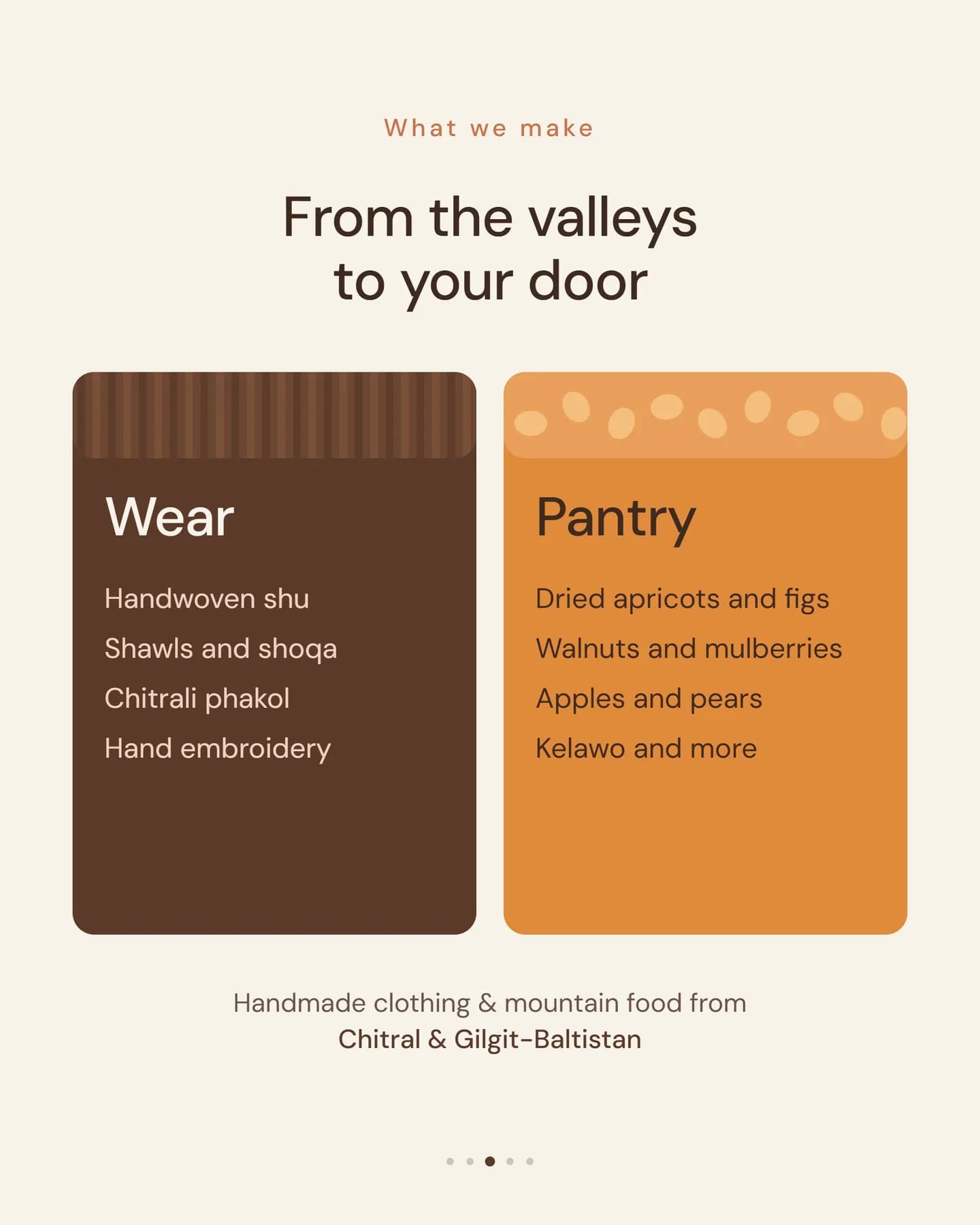
Our dried mulberries come from the valleys of the north. You will find them with our other dry fruits and in the taste of the north sampler. Cooked down into syrup, mulberries also coat the walnuts in our kelawo.