Palogh and tong: how to eat and cook dried apples and pears
Palogh and tong are Chitrali dried apples and pears. How to eat them as a snack, soften them, and cook them into a warm winter compote, porridge and cake.
3 min read
On this page
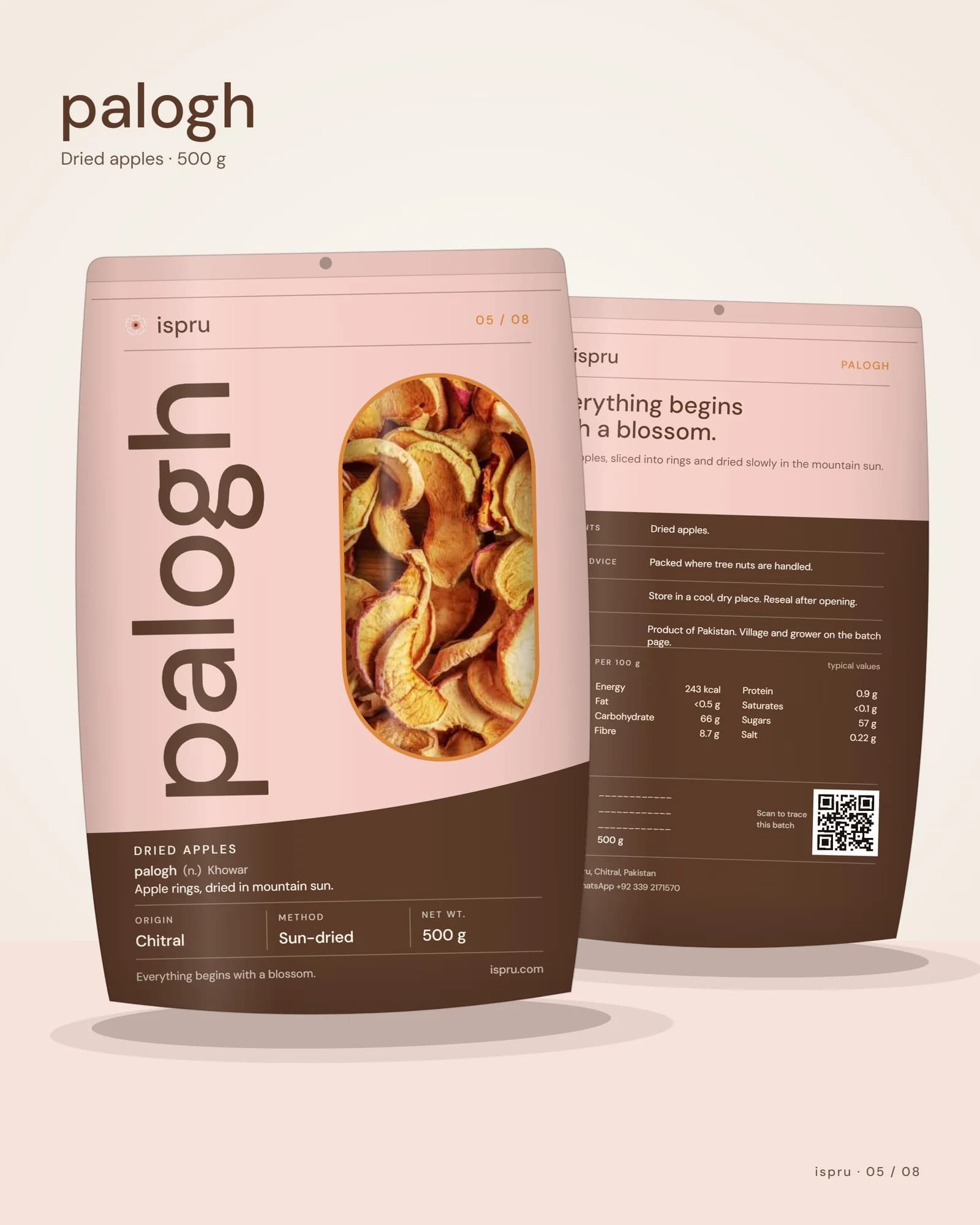
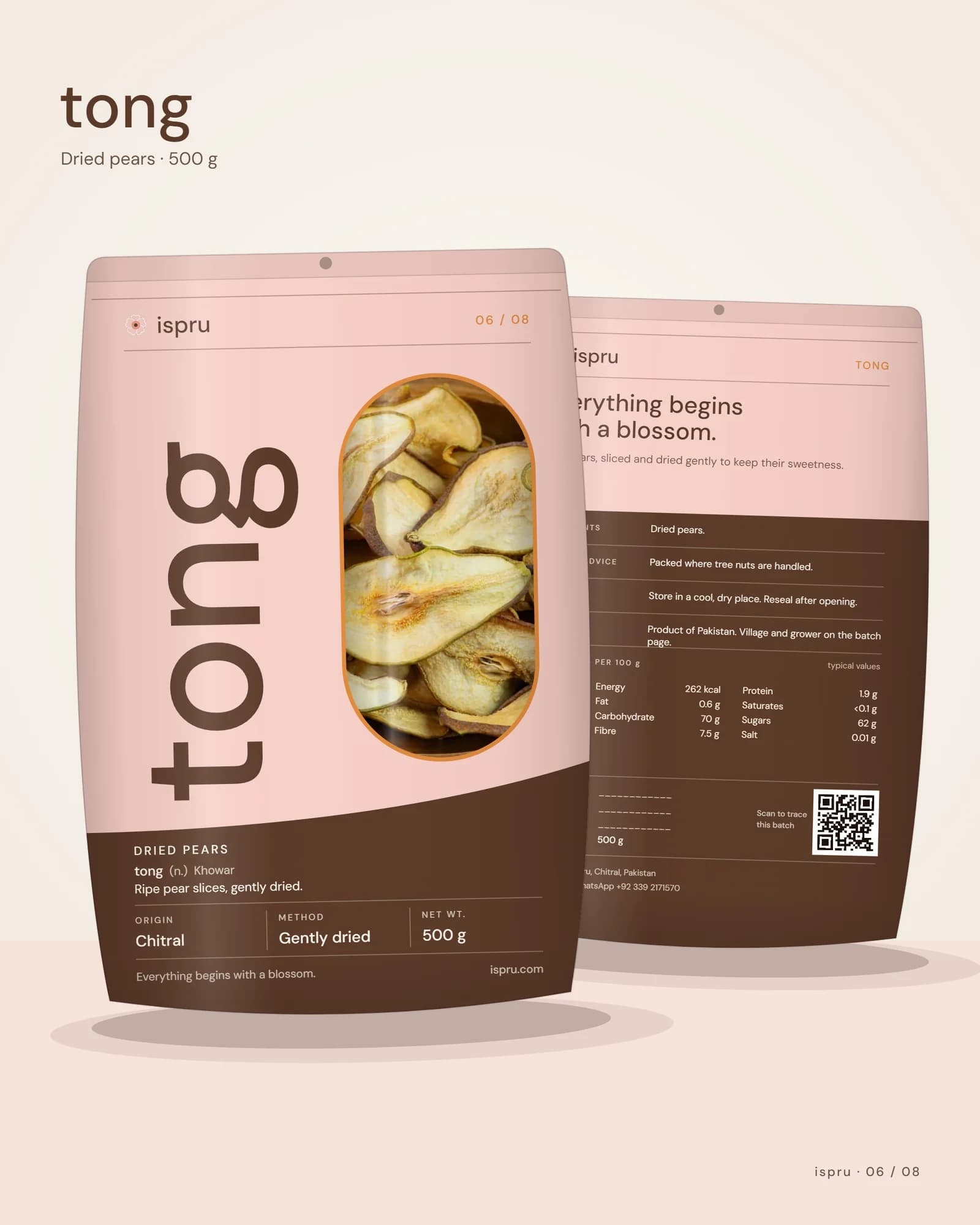
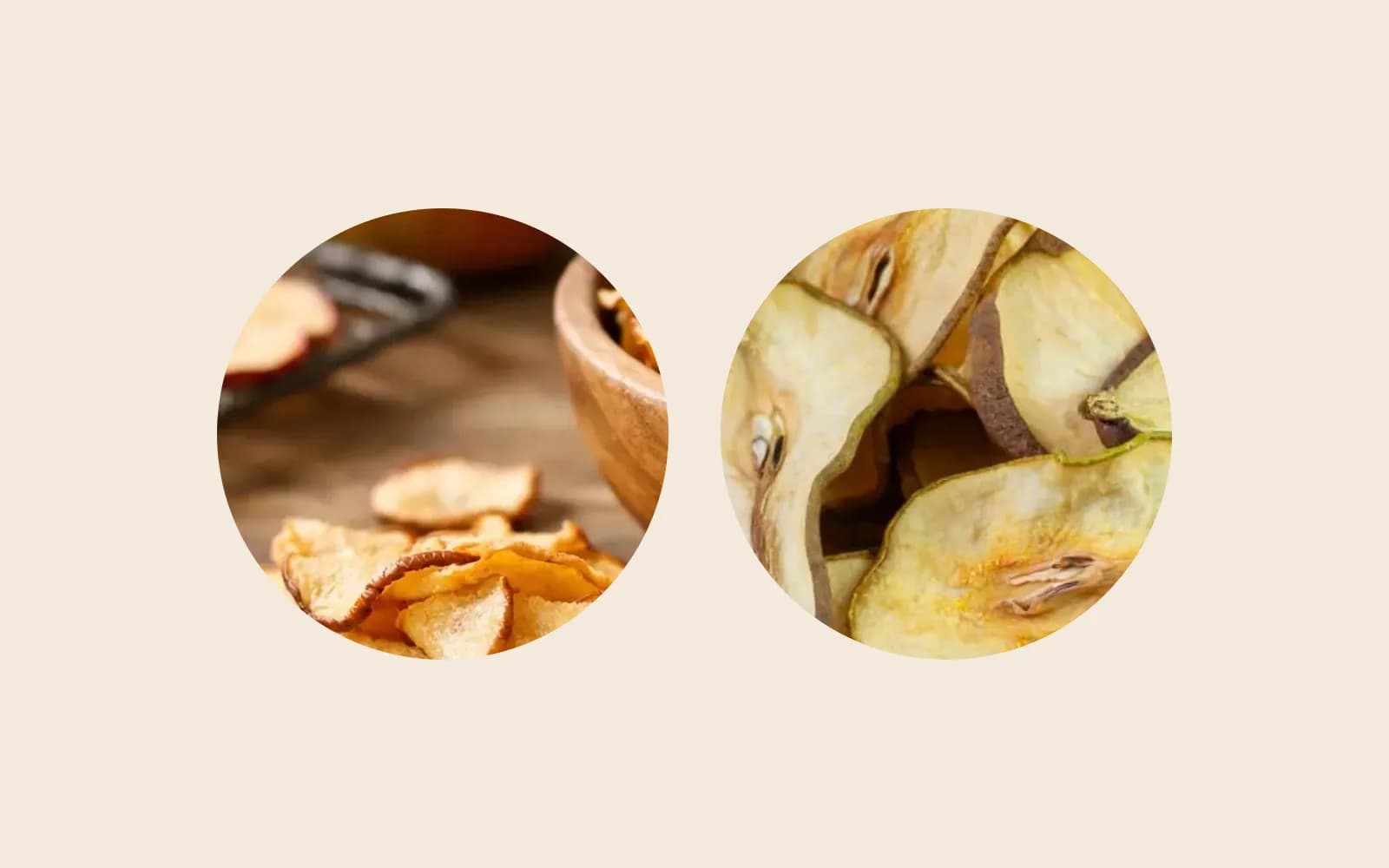
In Khowar, the language of Chitral, dried apples are called palogh and dried pears are called tong. In Urdu they are khushk seb (خشک سیب) and khushk nashpati (خشک ناشپاتی).
Apple orchards fill the valleys of Chitral. Late in the season, the apples are sliced into rings and dried slowly in the mountain sun, and ripe pears are sliced and dried gently to keep their sweetness. Nothing is added: the only ingredient in each pack is the fruit.
As a snack
Both are ready to eat straight from the pack.
- With chai: palogh make a crunchy snack with a cup of tea.
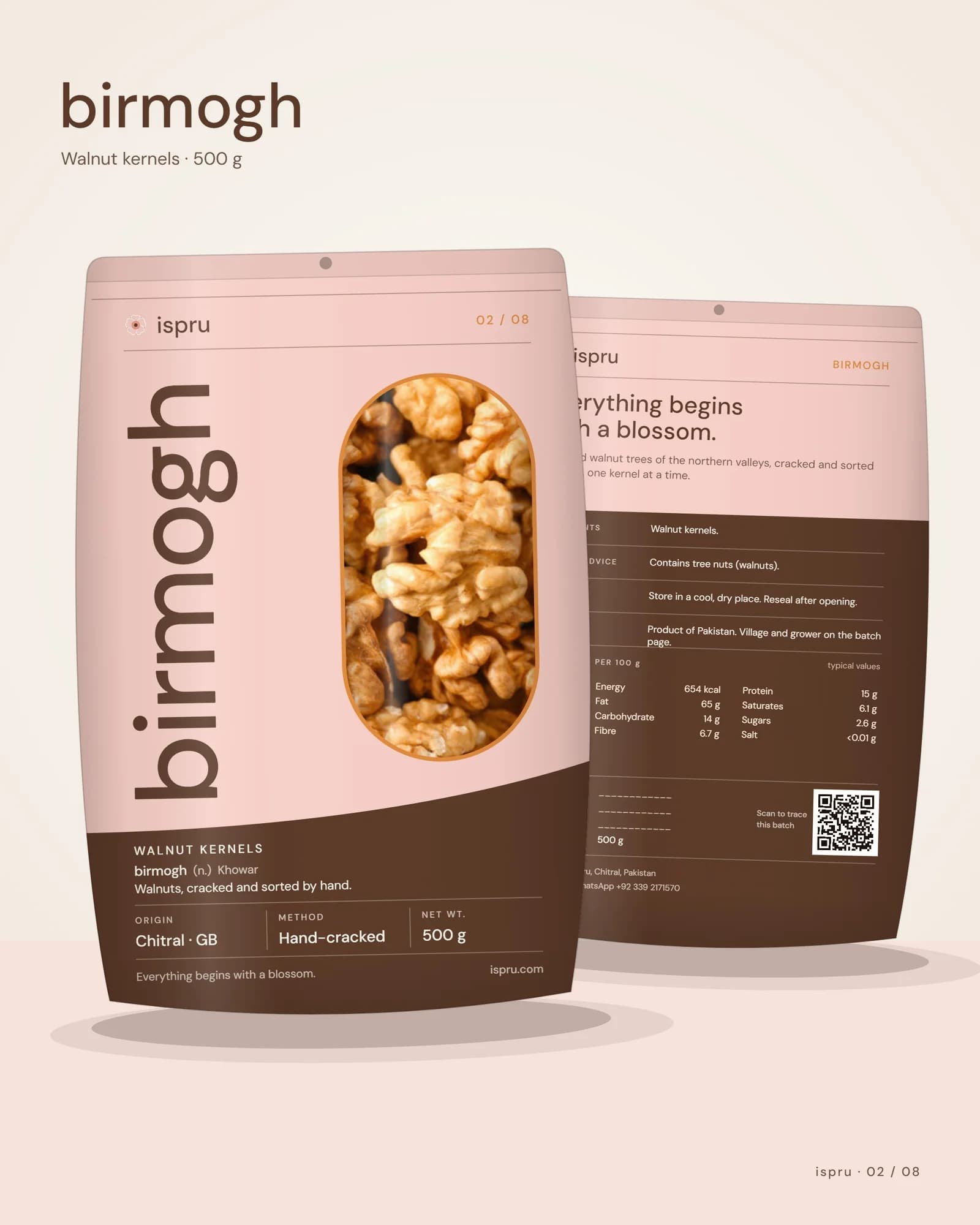
- With walnuts and cheese: tong are sweet, and go well with walnut kernels and a slice of cheese.
- For school and travel: they are light and don't squash, so they pack easily into a lunch box or a bag.
Like all dried fruit they are sweet: dried apples have about 57 g of sugars per 100 g and dried pears about 62 g, according to typical USDA values. See how they compare in our calories and nutrition guide.
How to soften them
For cooking, or if you like them softer, cover the slices with hot water and leave them for 10 to 15 minutes. Drain them, and keep the water: it tastes of the fruit and can go into a compote.
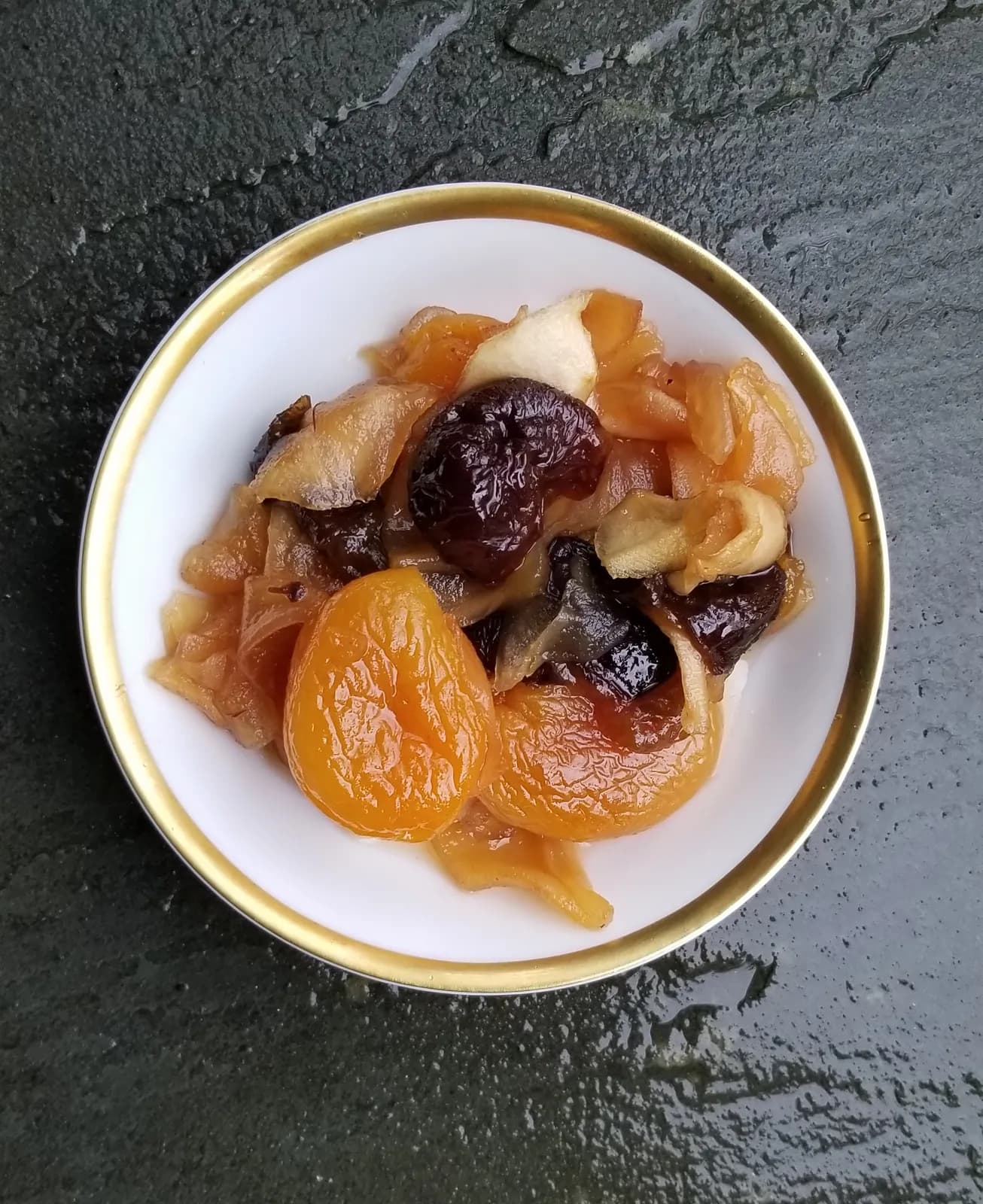
A warm winter compote
A compote is fruit simmered gently in a little liquid until it is soft and the juice turns into a light syrup. Dried apples and pears are made for it.
You will need (serves 4):
- 100 g tong (dried pears)
- 100 g palogh (dried apples)
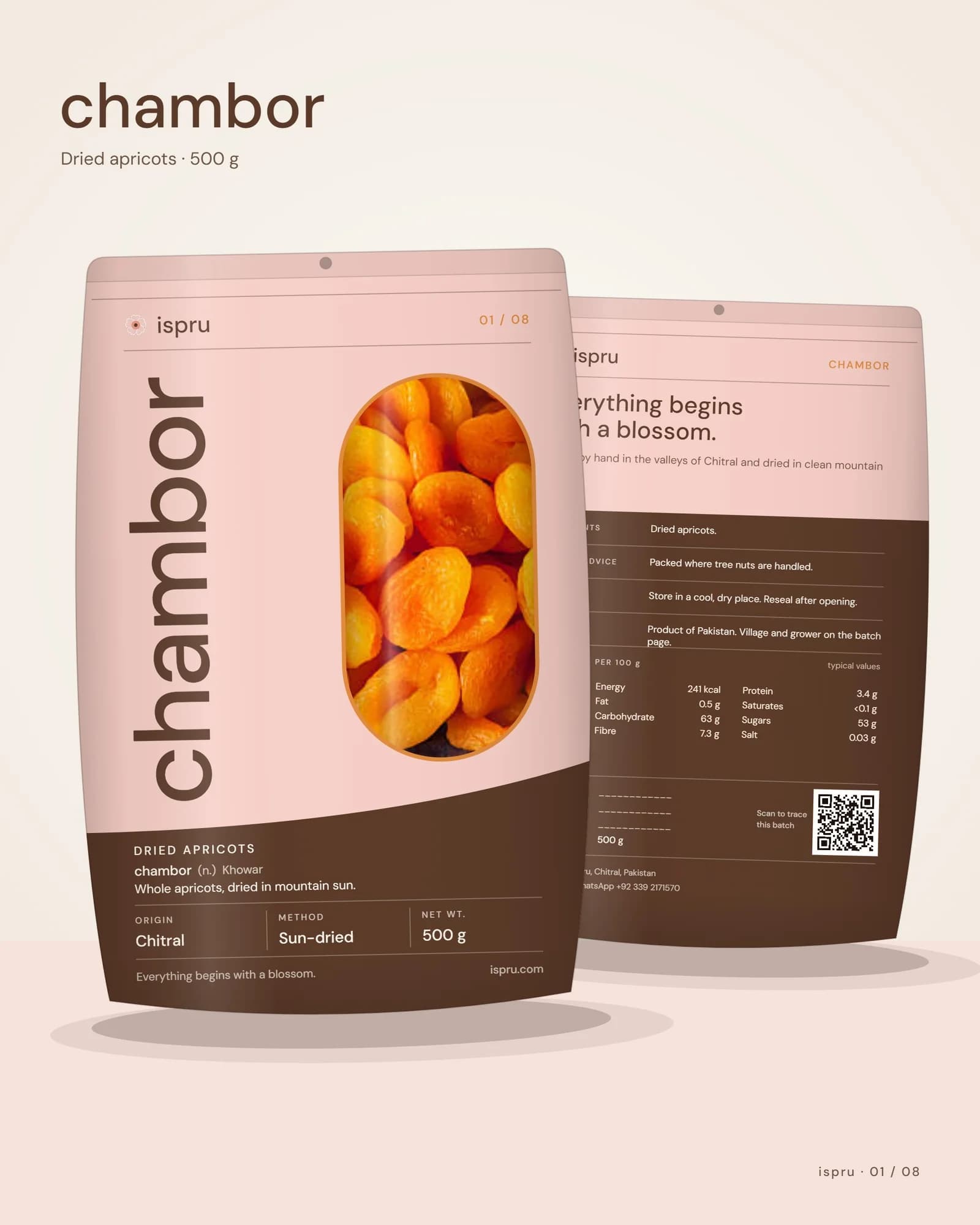
- 50 g chambor (pitted dried apricots), optional
- 750 ml (3 cups) water
- 1 small stick of cinnamon, and 2 cloves or 2 green cardamom pods
- 1 to 2 tbsp honey, optional
- A squeeze of lemon, optional
Method:
- Cut any large pieces of fruit in half.
- Put the fruit, water and spices in a pan and bring it to the boil. Turn the heat down low.
- Simmer, partly covered, for 20 to 25 minutes, until the fruit is soft and the liquid has thickened a little.
- Take the pan off the heat and lift out the whole spices. If you would like it sweeter, stir in the honey now, then add a squeeze of lemon.
- Serve it warm with yogurt or cream, or cold from the fridge.
Keep any that is left in a closed box in the fridge and eat it within 3 or 4 days. Please remember that honey is not for babies under one year old.
In breakfast
- Porridge or daliya: chop a few rings of palogh and stir them in while it cooks.
- Yogurt: top a bowl of yogurt with chopped tong and walnuts, and a little honey.
- Leftover compote: spoon it over porridge or yogurt the next morning.
In baking
Chop palogh or tong into small pieces and fold a handful into cake batter or bread dough. They go well with walnuts, as in our walnut cake.
A plate for guests
Set out palogh and tong with walnut kernels, chambor and a few pieces of kelawo, the Hunza candy, for a plate of dry fruit from the north. Our tester kit has a small pack of each.
How to keep them
Keep them in a closed bag or jar in a cool, dry place, and in the fridge in hot weather. Ours keep for 12 months from packing. If they have dried out and turned hard, soak them as above, or cook them into a compote. See our storage guide for the rest of your dry fruit.
For more warm ideas, see dry fruits for winter.