The Chitrali shawl: how to choose, wear and look after one
A guide to the Chitrali wool shawl, for men and women: what it is made of, how to tell handspun from machine-made, ways to wear it, and how to wash and store it.
3 min read
On this page
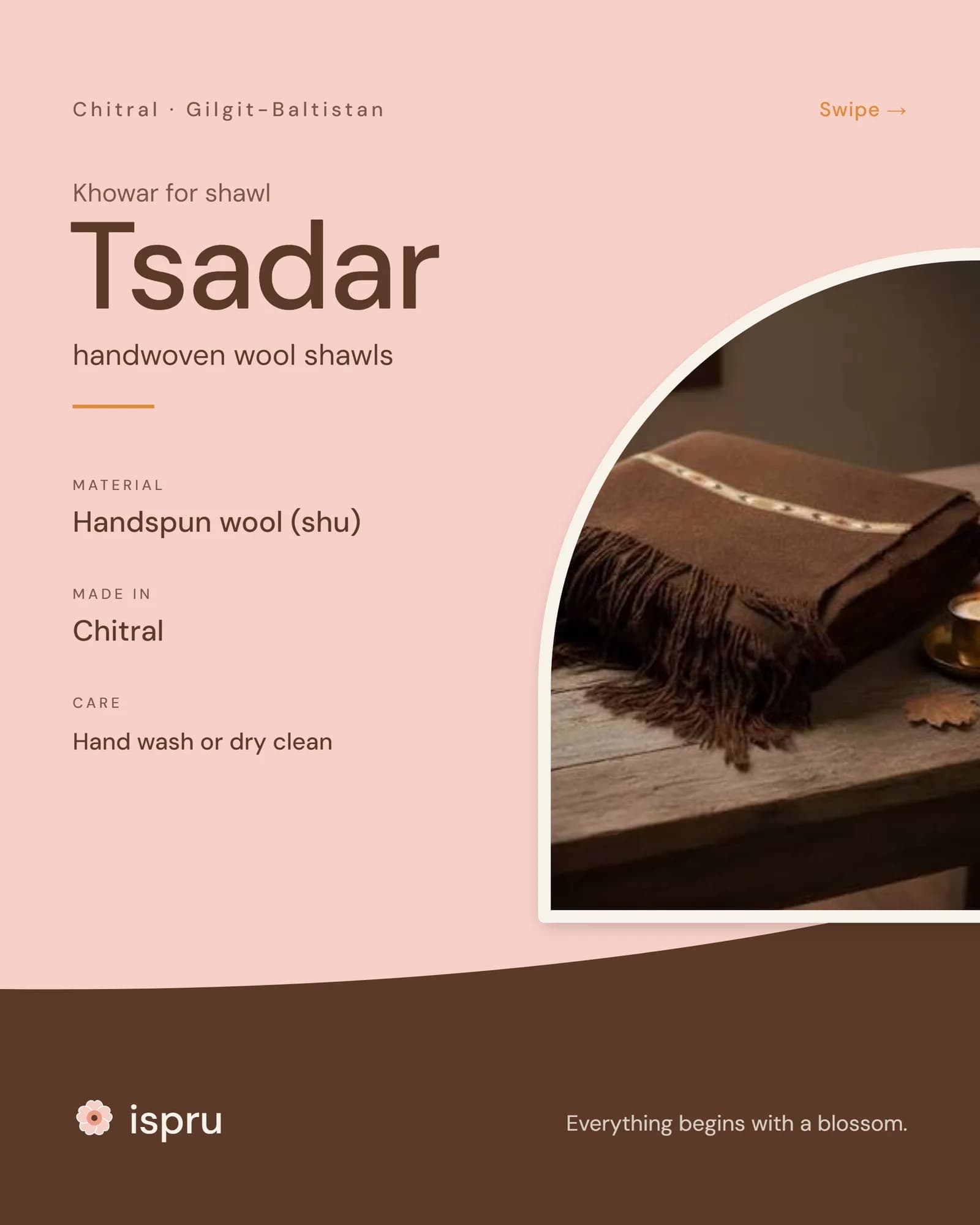
In Khowar, the language of Chitral, a shawl is a tsadar. A Chitrali shawl is woven from wool, and the best are woven by hand from handspun yarn, like the cloth known across Pakistan as Chitrali patti. Here is what to look for when you buy one, how to wear it, and how to make it last.
What it is made of
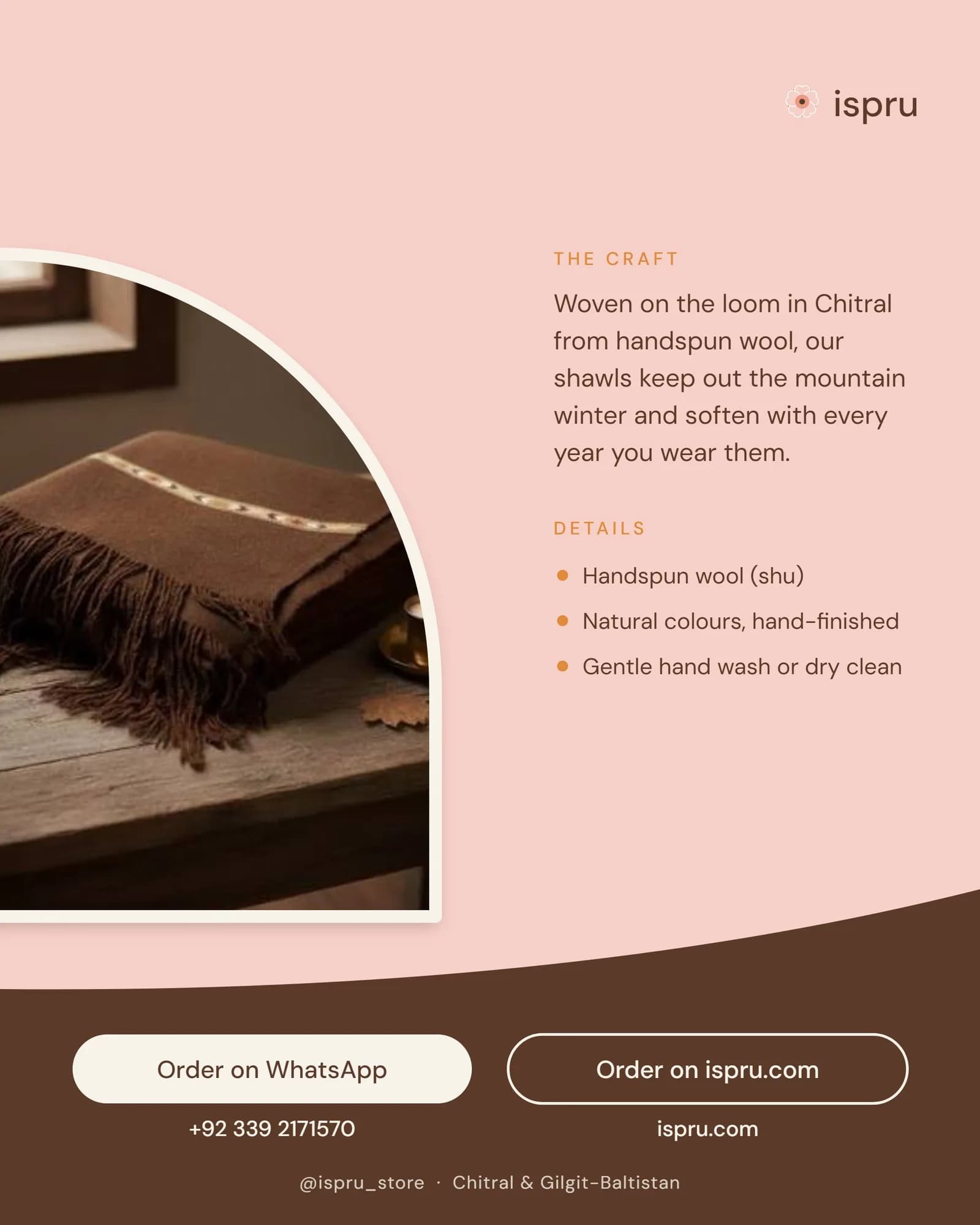
Our shawls are woven on the loom in Chitral from handspun sheep's wool (poshp). The raw wool is washed by hand, spun into yarn on a spindle, and woven, then the edges are finished by hand. They come in natural colours.
Handspun wool has small variations in thickness, and these give the cloth its texture. A new shawl can feel slightly rough, and it softens with every year you wear it.
For men and for women
A wool shawl suits everyone. Men wear it over a shalwar kameez or a jacket; women wrap it around the shoulders or wear it over a coat. Ours is one size, about 42 by 90 inches, not counting the fringe, which is enough to wrap well around the shoulders. Handwoven cloth varies a little, so each shawl can differ by an inch or so.
How to choose one
Not every wool shawl is handspun. Much of the cheaper cloth sold as Chitrali patti is woven on power looms, often with a cotton warp. These checks help you tell what you are buying:
- Look at the yarn. Handspun yarn varies a little in thickness, so the surface has a gentle unevenness. Machine-spun yarn looks very regular.
- Check both directions. In an all-wool shawl, the threads that run along the length and those that run across both look and feel like wool.
- Feel the weight. Good handspun wool feels dense and a little springy.
- Ask the seller where it was woven, and by whom.
- Think about the price. Spinning and weaving by hand takes far longer than a machine does.
Our guide to Chitrali patti explains each of these, with a simple burn test you can do on a single loose thread.
Ways to wear it
- Over both shoulders: lay it across your back and let the two ends hang evenly in front.
- The wrap: lay it over both shoulders, then throw one end back over the opposite shoulder. It stays put, and keeps your neck warm.
- Folded long: fold it in half lengthways and wear it over a coat, like a wide scarf.
- At home: around your shoulders on a cold evening, or over your knees.
- On the road: a warm cover on a long journey north.
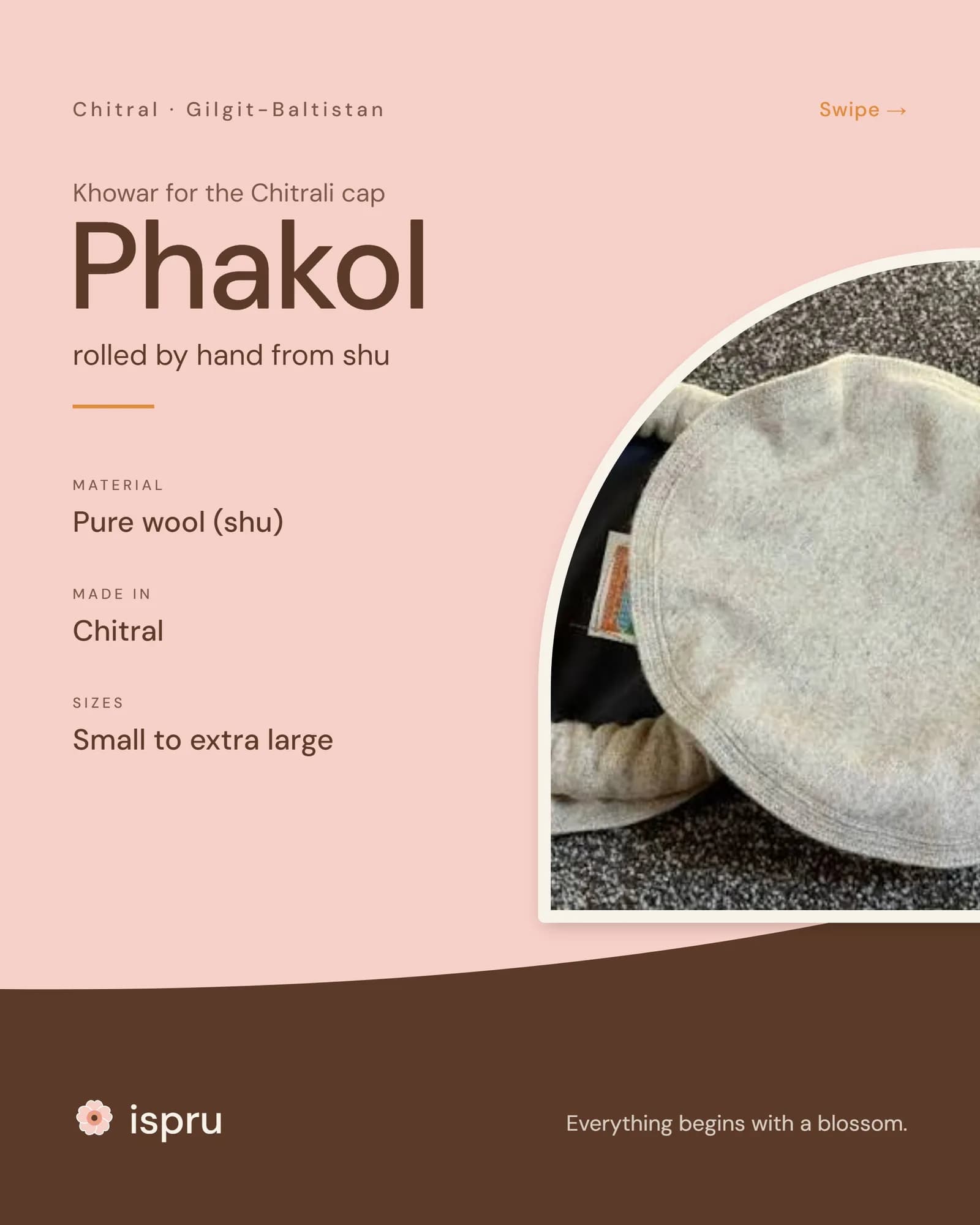
With a phakol, the rolled Chitrali wool cap, it makes a warm winter pair. Read the story of the phakol.
How to look after it
- Air it often rather than washing it. Hang it outside in the shade for an hour or two.
- Washing: dry clean it, or hand wash it in cold water with a little wool soap. Don't rub or wring it: press the water out gently.
- Drying: dry it flat in the shade, away from direct sun and heaters.
- Storing: store it clean and dry, folded, in a breathable cotton bag. A few dried neem leaves in the bag help keep moths away.
- Pilling: handspun wool can pill a little at first. Remove the small balls gently by hand.
- Brushing: a soft clothes brush now and then lifts dust before it settles in.
Looked after like this, a good wool shawl lasts for many years.
From Chitral
See our patti shawl, and for gift ideas, gifts from the north.