Akhrot halwa: walnut halwa with ghee, milk and cardamom
An easy akhrot halwa (walnut halwa) recipe: walnut kernels roasted slowly in ghee, then cooked in milk with sugar and cardamom. Serve it warm, or set it and cut it into squares.
3 min read
On this page
Akhrot ka halwa (اخروٹ کا حلوہ), or walnut halwa, is a rich sweet of ground walnuts roasted slowly in ghee and cooked in milk. It is made in one pan with a handful of ingredients, and it is warm and filling, which makes it a good sweet for a cold evening.
Almost all the flavour comes from the walnuts, so start with fresh kernels. Old walnuts taste bitter, and the bitterness carries into the halwa, so taste one before you start. Our guide to walnuts of the north explains how to tell if walnuts are fresh.
Before you start
- Use a heavy-based kadai or pan, so the halwa cooks evenly and does not catch.
- Keep the heat low to medium the whole time. Ground walnuts burn quickly, and a burnt taste cannot be fixed.
- Measure everything first. Once the walnuts are in the pan, you will need to keep stirring.
Grind the walnuts
- Put the walnut kernels in a dry pan over a low heat and toast them for 4 to 5 minutes, stirring, until they smell nutty. Let them cool.
- Grind them in a grinder in short bursts, until they look like coarse semolina. Do not grind them for long, or they will release their oil and turn into a paste.
- No grinder? Put the walnuts in a strong bag and crush them with a rolling pin.
Cook the halwa
- Heat the ghee in the kadai over a low heat. Add the ground walnuts and stir for 5 to 7 minutes, until they are a shade darker, smell toasted and have soaked up the ghee.
- Pour in the milk a little at a time, stirring as you go. If you are using milk powder, stir it in now. Cook over a low to medium heat, stirring often, for 10 to 15 minutes, until most of the milk has been absorbed and the mixture has thickened.
- Add the sugar. The mixture will loosen as the sugar melts. Keep stirring for 5 to 8 minutes more, until it thickens again, comes away from the sides of the pan in one soft mass, and a little ghee shines at the edges.
- Stir in the cardamom and take the pan off the heat. The halwa should still be soft, because it firms up as it cools.
To serve
- Warm: spoon it into small bowls and scatter the chopped walnuts on top.
- As squares: spread the hot halwa about 2 cm thick on a greased plate or tray, press the chopped walnuts into the top, and leave it for 30 minutes to set. Then cut it into squares.
Ways to change it
- Less sweet: start with 75 g of sugar, taste, and add more if you like.
- With khoya: for a richer halwa, leave out the milk powder and crumble 50 g of khoya into the pan with the milk.
- With saffron: soak a few threads of saffron in a spoonful of warm milk, and add it with the sugar.
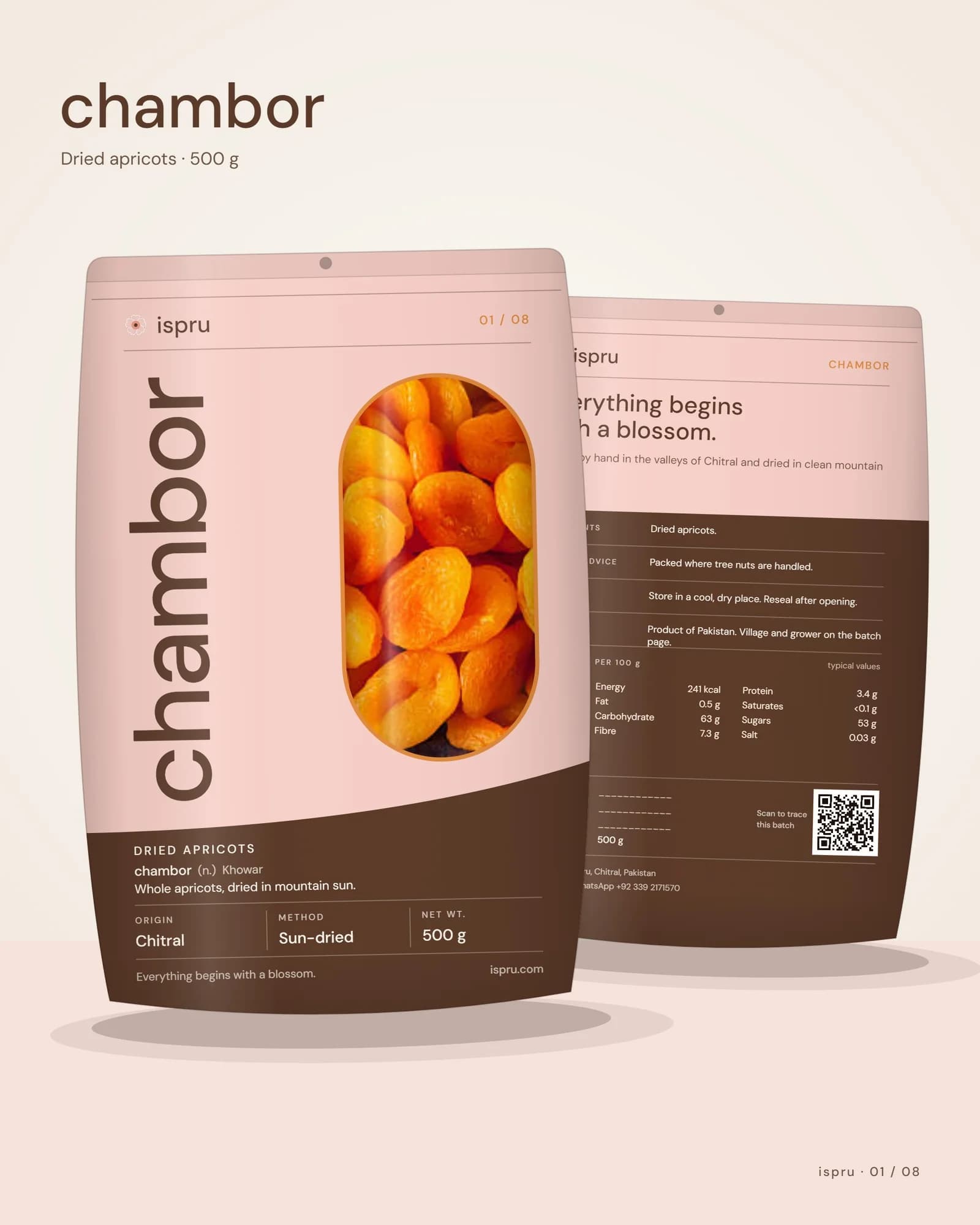
- With chambor: chop 4 or 5 dried apricots and stir them in with the sugar. They add a little sharpness to the sweet walnuts.
Keeping
Keep any leftover halwa in a closed box in the fridge, and eat it within three or four days. Warm it gently in a pan with a spoonful of milk before serving.
This halwa is made almost entirely of walnuts, so if you are serving it to guests, mention it to anyone with a nut allergy.
From the valleys
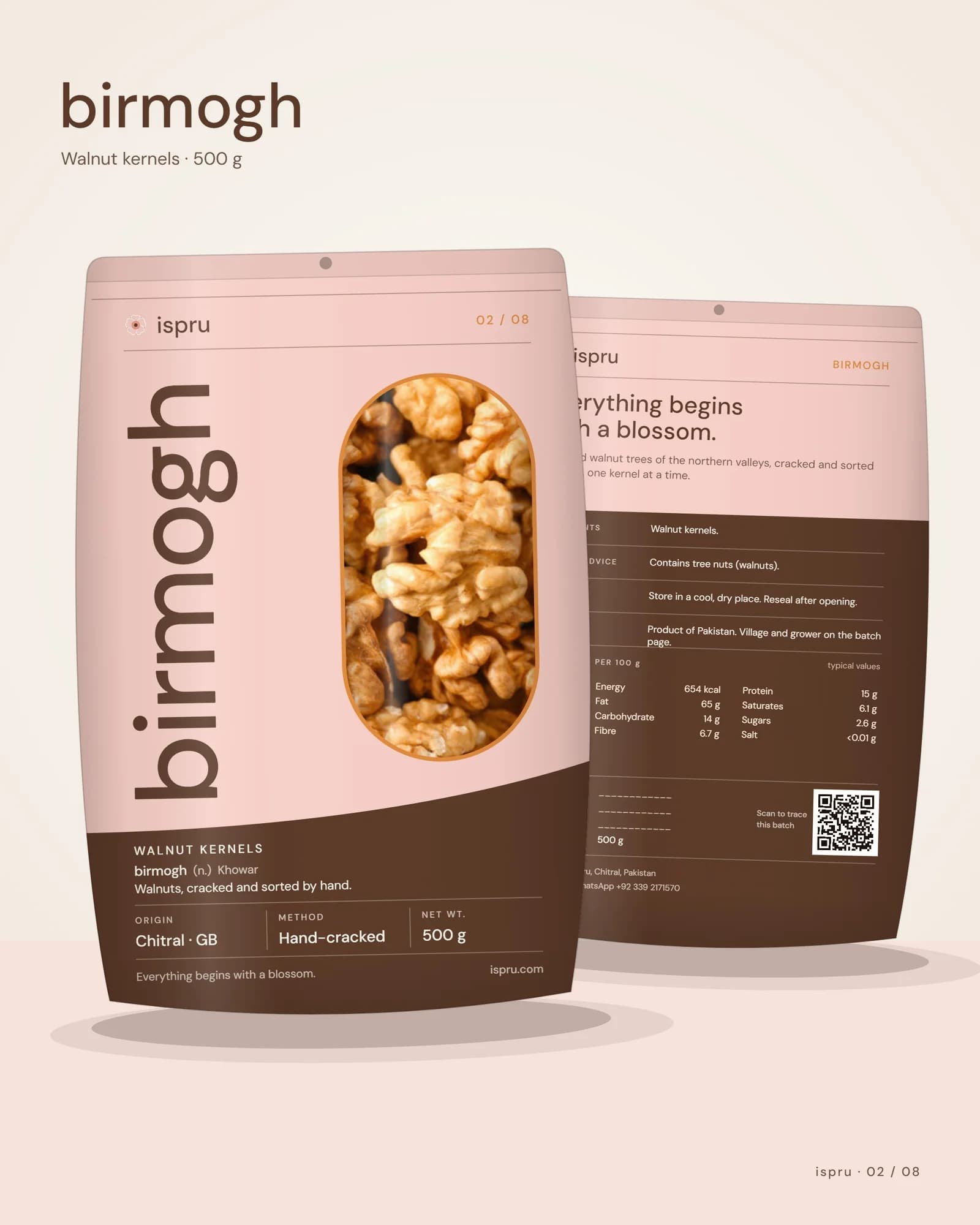
This halwa is made for our birmogh kernels: walnuts from old village trees in Chitral, cracked and sorted by hand. For the chambor variation, use our dried apricots.
For more ways with walnuts, bake our walnut cake, roll dry fruit laddu, or make the walnut powder in dry fruits for winter. If your walnuts are still in their shells, here is how to crack them.