What is shilajit (salajeet)? Where it comes from, how it is taken, and who should avoid it
Shilajit, or salajeet, is a dark resin that seeps from high mountain rock. What it is, its names in English, how it is sold and taken, and who should not take it.
5 min read
On this page
Please read this first. Shilajit is not for children, or during pregnancy or breastfeeding. If you take any medicines or have a health condition, ask your doctor before you take it.
Shilajit, or salajeet (سلاجیت) as it is usually called in Pakistan, is a dark, sticky resin that seeps from rock high in the mountains. In Chitral it has a name of its own, zomo ashru, which Dawn translates as "tears of mountain". Here is what reliable sources say about what it is, how it is taken, and who should avoid it.
What shilajit is
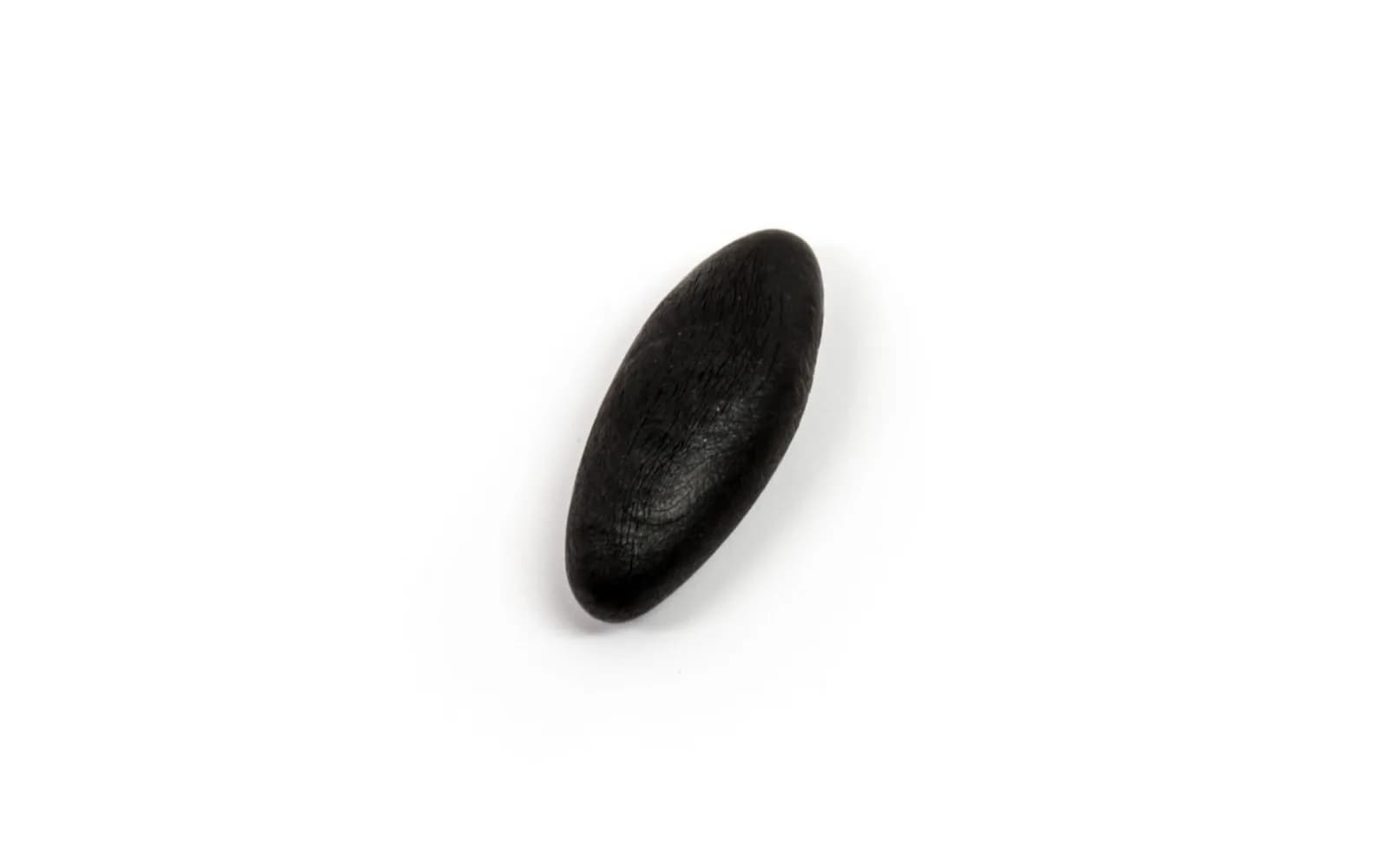
"Shilajit is a natural substance found at high elevations in various mountain ranges," says WebMD. "It forms over hundreds of years from rocks, soil, and plant remains and contains many different chemicals and minerals." Cleveland Clinic describes it as "a black, sticky substance" that "develops over centuries in the crevices of rocks and boulders".
It is found in many mountain ranges, especially the Himalayas and the Hindu Kush, and Pakistan is one of the countries where it is found. What is in it varies: WebMD notes that its "actual contents change depending on which mountain range it comes from".
Shilajit in English and other names
In English it is usually just called shilajit. Other English names include mineral pitch and mumio. In Urdu it is salajeet, and in Chitral, zomo ashru.
Shilajit from Chitral and Gilgit-Baltistan
In 2025, Dawn reported a growing number of shops in Chitral selling shilajit gathered locally, from mountains "rich in salajeet". Gathering it is hard work: a hakeem in Chitral told Dawn that it seeps "from the crevices of steep mountains in highest altitudes, which is generally inaccessible for human beings".
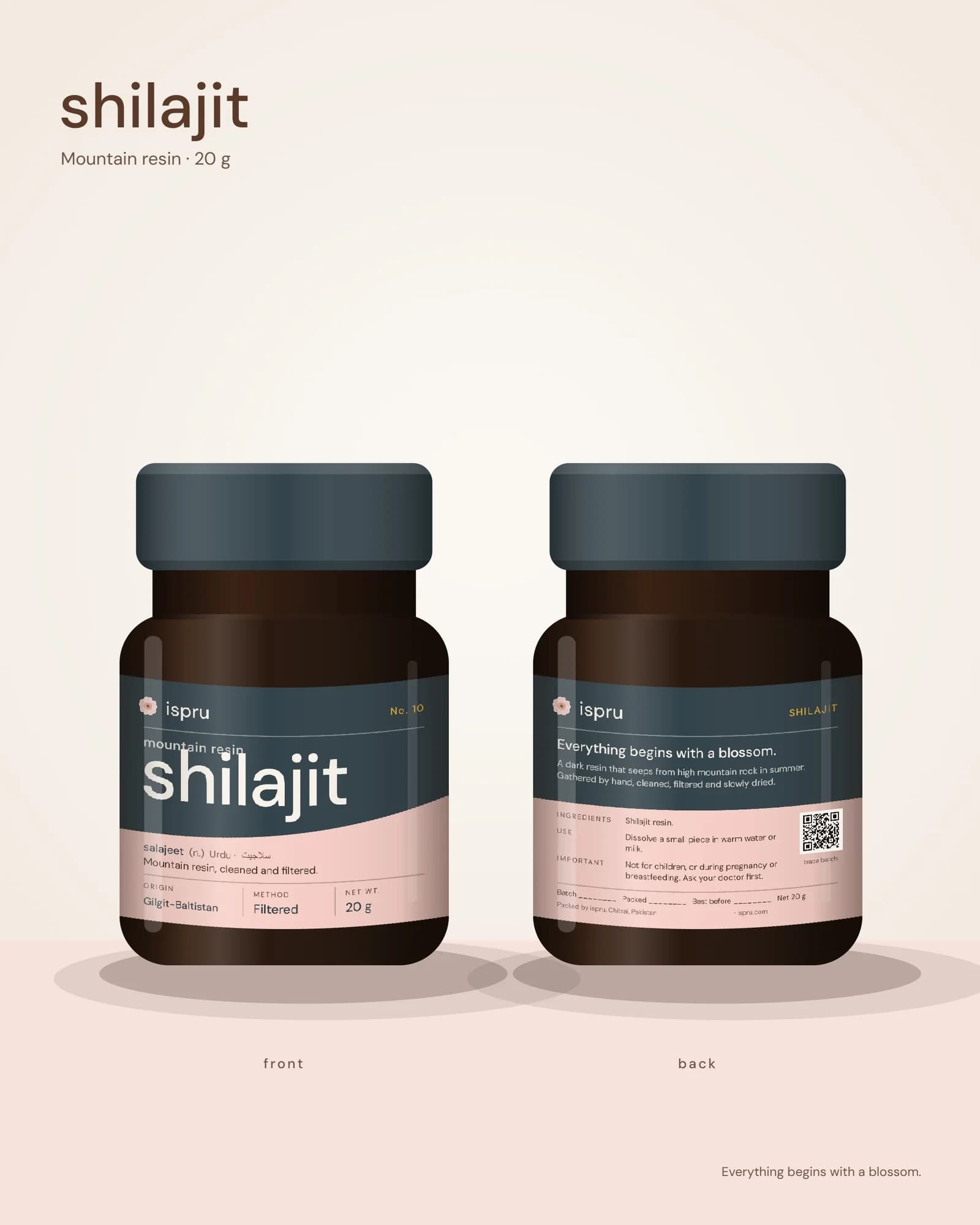
Our shilajit comes from the mountains of Gilgit-Baltistan, where the resin seeps slowly from sun-warmed rock each summer. It is gathered by hand, then cleaned, filtered and dried, with nothing added.
How it is sold
Shilajit is sold as a resin, a powder and in capsules, and also as liquids, gummies, pills and tablets. Ours is the resin, in a 20 g jar. The resin softens in the heat and hardens in the cold; both are normal.
How to take shilajit
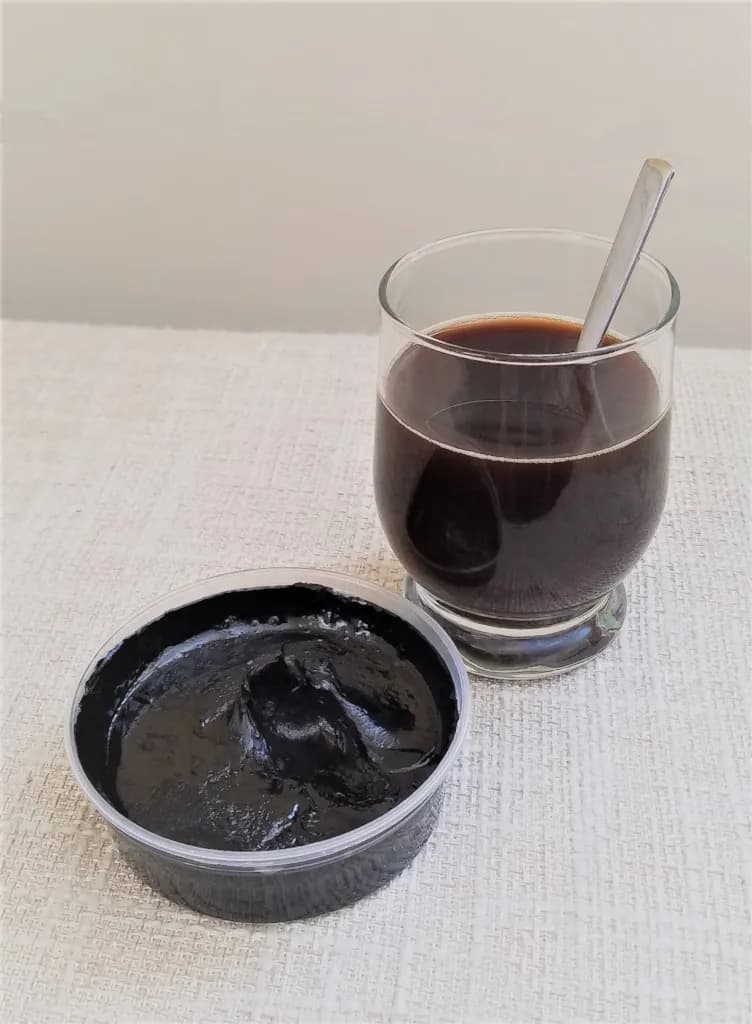
In the mountains, shilajit has long been taken dissolved in hot water or milk. A shopkeeper in Chitral told Dawn that it "was taken before going to bed after being dissolved in hot water or milk".
The most important rule is the simplest: follow the directions on your jar. WebMD gives the same advice: "Read and follow the directions on the specific product." For our shilajit:
- Take a small piece from the jar with a clean, dry spoon.
- Stir it into a cup of warm water or milk, or into your morning tea, until it dissolves.
- Drink it, and close the jar.
Who should not take it
- Children. Cleveland Clinic says "it's best not to give shilajit to children". Keep the jar out of their reach.
- During pregnancy or breastfeeding. WebMD says: "It is not known if or how shilajit could affect pregnancy or harm a fetus," and "It is not known if shilajit passes into breast milk."
- If you take medicines. "The interactions between shilajit and medicines are not fully understood," says WebMD. Ask your doctor first.
- If you have a health condition. Cleveland Clinic says a doctor may recommend skipping shilajit if you have heart disease or blood pressure problems, take a blood thinner or have a bleeding disorder, or have diabetes, liver or kidney disease.
Cleveland Clinic adds that the few clinical trials done so far "suggest that shilajit is relatively safe when taken as directed", but that it sometimes causes a sore throat, headaches and dizziness, and some people have reported stomach upsets. If you feel unwell after taking it, stop and speak to your doctor.
Raw shilajit and home tests
Shilajit should not be eaten straight from the rock. A doctor quoted by Cleveland Clinic warns that shilajit "in its natural form, is likely to have a number of impurities — such as heavy metals and microbial organisms". Researchers writing in the International Journal of Ayurveda Research agree: "Raw and unprocessed Shilajit should not be used."
You will find many home tests for "pure shilajit" online, such as dissolving it in water or holding it to a flame. We could not find any reliable research showing that they work. A shopkeeper in Chitral told Dawn that pure salajeet dissolves completely in hot water or milk, and that this was the usual way to test it. But no home test can show whether shilajit contains heavy metals: that takes a laboratory.
The best thing you can do is buy from a seller who tells you where their shilajit comes from, and whom you can ask.
A note on health claims
You will also find many health claims for shilajit online. A 2011 review of the research concluded that "the bioactivity of shilajit lacks substantial evidence". We make no health claims for ours.
How to store it
Keep the jar closed, in a cool, dry place out of sunlight, and out of reach of children. Ours keeps for 24 months from packing. See our storage guide for the rest of the honey and shilajit section.
Sources
- WebMD, reviewed 15 April 2026: Shilajit: uses, side effects, interactions, pictures, warnings and dosing (opens in a new tab)
- Cleveland Clinic, 11 March 2025: Shilajit benefits, side effects and uses (opens in a new tab)
- Dawn, 21 March 2025: The healing touch of 'mountain tears' (opens in a new tab)
- Agarwal and others, Phytotherapy Research, 2007: Shilajit: a review (opens in a new tab)
- Meena and others, International Journal of Ayurveda Research, 2010: Shilajit: a panacea for high-altitude problems (opens in a new tab)
- Wilson and others, Journal of Ethnopharmacology, 2011: Review on shilajit used in traditional Indian medicine (opens in a new tab)