Is crystallised honey pure? What home tests can and can't tell you
Why honey sets into crystals, how to make it runny again, and what scientists say about checking pure honey at home with water, fire or your thumb.
3 min read
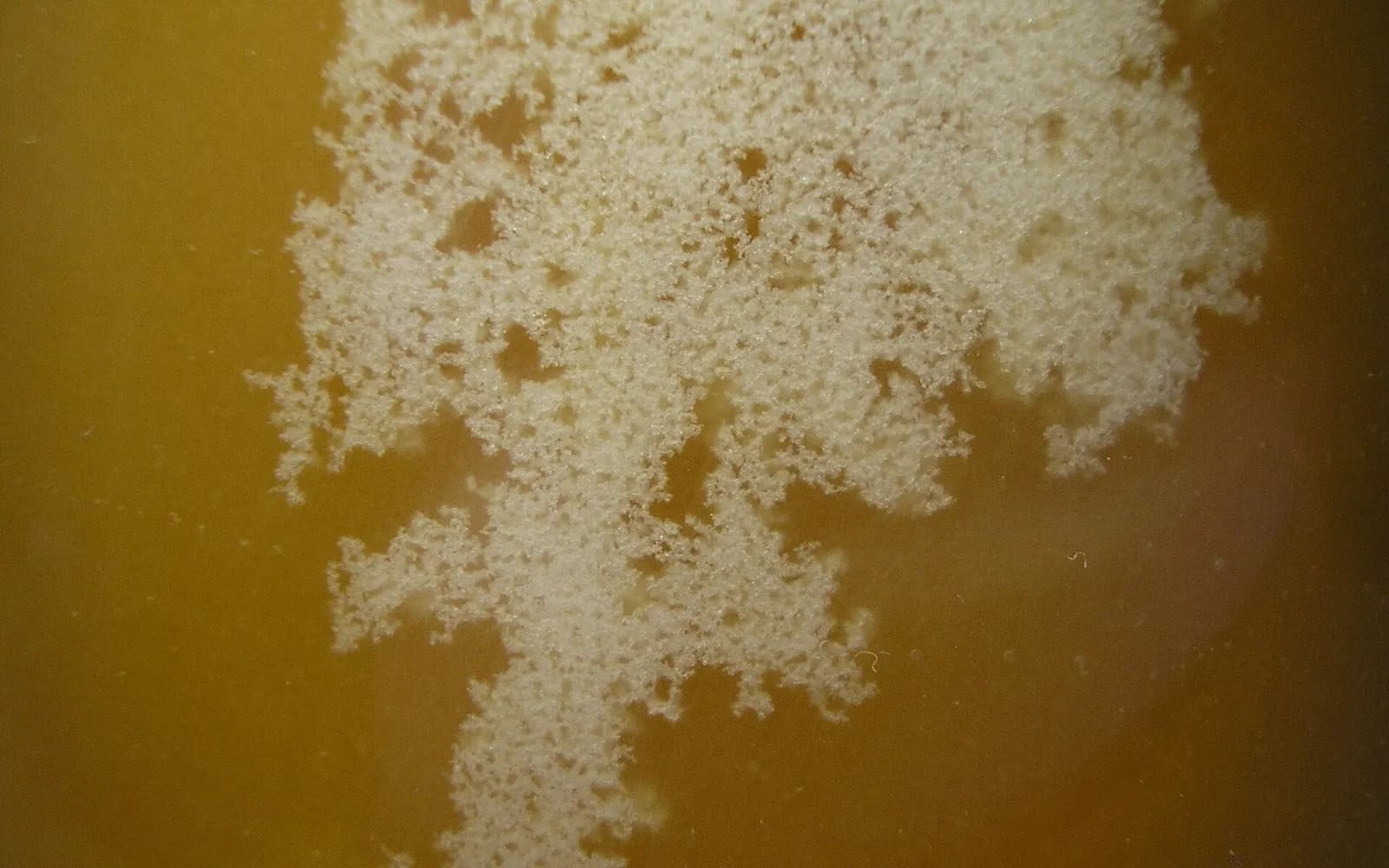
Photo: Stevo-88 / Wikimedia Commons (opens in a new tab), public domain
On this page
Many people in Pakistan check their honey at home: a drop in a glass of water, a matchstick dipped in honey and lit, a smear on the thumb. And many worry when a jar of honey turns thick and grainy. Here is what reliable sources say about both.
Crystallised honey is normal
Honey is mostly sugars, and over time some of its sugar can come out of the liquid as tiny crystals. The honey turns cloudy, then thick and grainy, and can set almost solid.
This doesn't mean the honey has gone off. The University of Florida's guide to honey puts it simply: "If honey crystallizes, it has not spoiled." The same guide says honey crystallises fastest at about 14 °C (57 °F).

Some honeys set quickly and some stay runny for a long time. Dr Nural Cokcetin, a microbiologist at the University of Technology Sydney, told ABC News that crystallisation is influenced by a range of factors, and that honeys with a higher glucose level crystallise faster. So whether honey crystallises tells you about the honey, not whether it is pure.
How to make it runny again
- Take the lid off the jar.
- Stand the jar in a bowl of warm water: warm to the touch, not boiling.
- Stir now and then until the crystals have melted.
Keep it gentle: the University of Florida guide warns that overheating can easily scorch honey. If it sets again, simply warm it again.
Do the home tests work?
Scientists say no. In 2018, ABC News asked two Australian scientists about the popular home tests: the water test, the flame test and the thumb test.
- Dr Peter Brooks, a chemist at the University of the Sunshine Coast, said: "I don't think you can tell the difference on these simple tests." He said the thumb test in particular was not reliable.
- Dr Cokcetin said: "Unfortunately, I don't think there is a quick and easy way to check the purity of honey at home." She added that crystallisation is not a reliable sign of purity either.
Checking honey properly takes a laboratory. Even then it isn't simple: Professor Mark Taylor of Macquarie University told ABC News that the official test for added sugar, which his team used, cannot detect some syrups, such as rice syrup.
What you can do
- Buy from someone who tells you where the honey comes from, and whom you can ask. Professor Taylor's advice was: "The only way to guarantee that you are getting real bona fide honey is to buy it from a local producer."
- Read the label. Honey should have only one ingredient: honey.
- Don't throw away honey because it has set. Warm it gently instead.
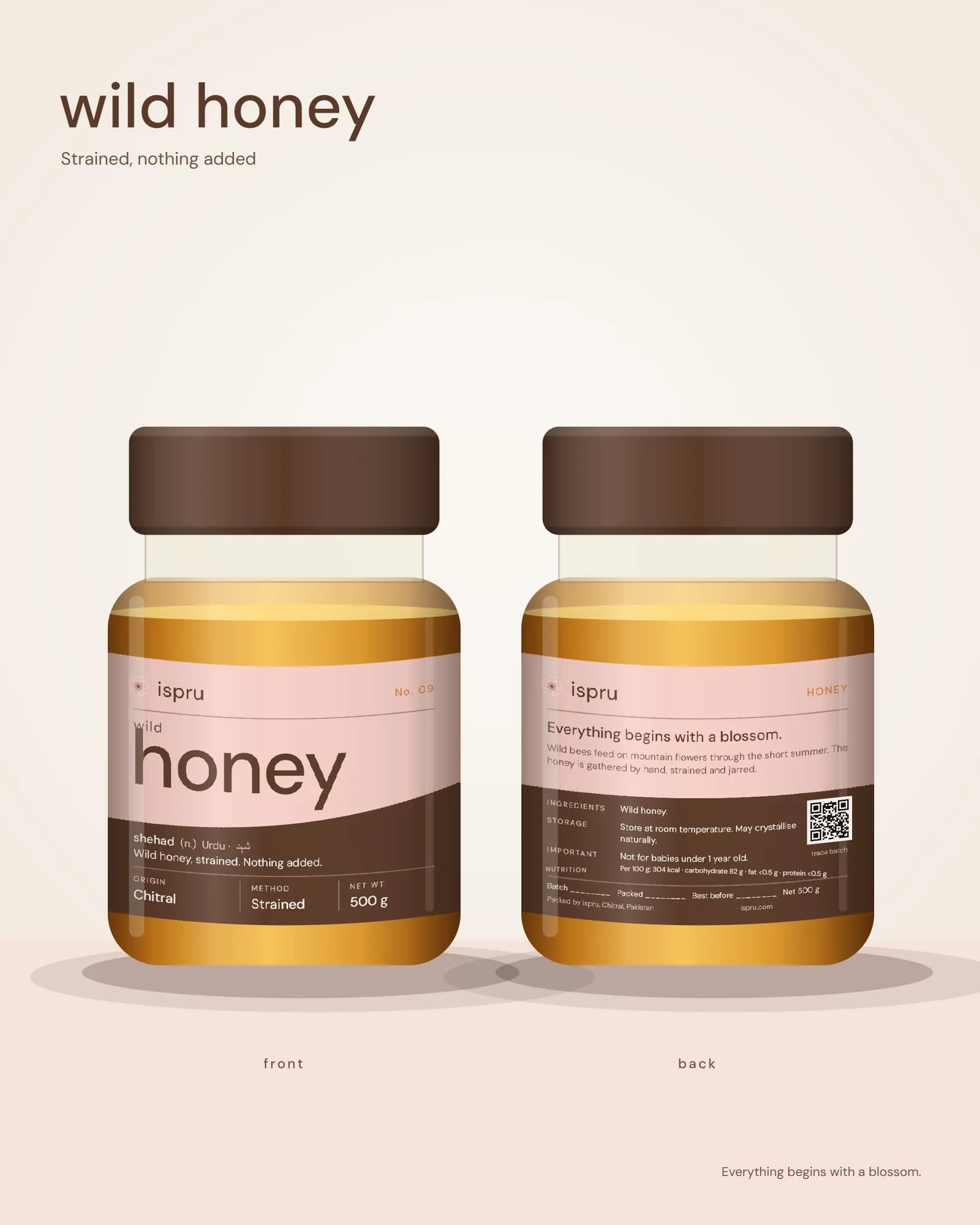
Our wild honey comes from Chitral. It is gathered by hand, strained and jarred, with nothing added, and its product page tells you where it comes from. Like most honey, it can crystallise; warm the jar gently in water and it turns runny again. Please remember that honey is not for babies under one year old.
Sources
- University of Florida IFAS Extension, Honey and Its Uses (opens in a new tab)
- ABC News, 4 October 2018: If honey dissolves in water, is it fake? Scientists cast doubt on DIY 'purity' test (opens in a new tab)
- ABC News, 3 October 2018: Almost 20 per cent of Australian honey samples found to not be pure (opens in a new tab)